
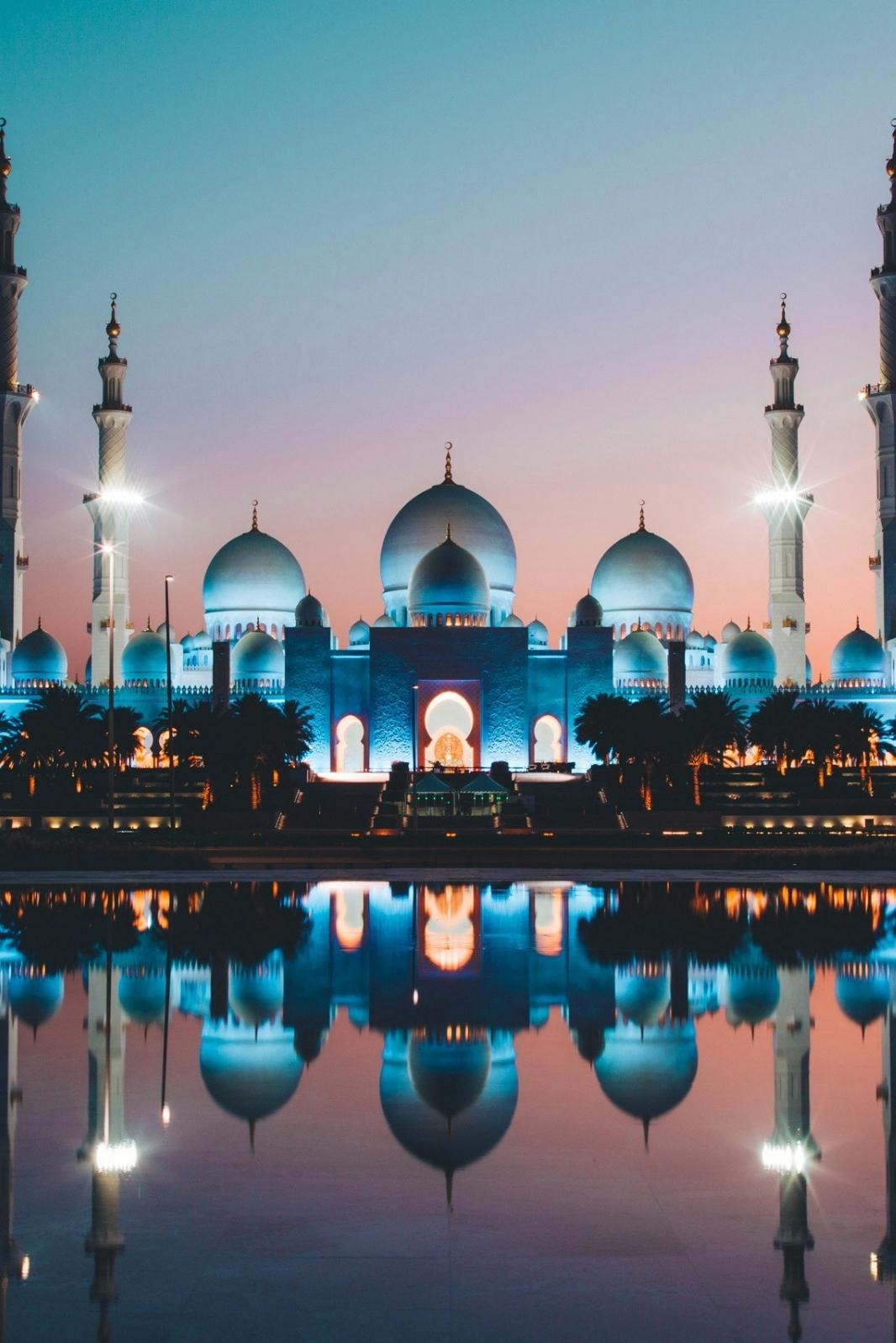
United Arab Emirates
The United Arab Emirates (UAE) is a federation founded in 1971. It is located on the Arabian Peninsula, bordering the Sultanate of Oman and Saudi Arabia.
The country is formed of 7 emirates which range from extravagant skyscrapers and futuristic cities to traditional towns, beaches, and expanses of desert.
Almost 88% of the population is made up of foreign nationals.
Good to know:
- Population: 9.8 million inhabitants in 2020
- Area: 83,600 km2
- Official language: Arabic
- Currency: UAE dirham (1 AED = 0.25 euros in January 2023)
Discover how the healthcare system works in the United Arab Emirates
The UAE has an excellent public and private healthcare system that meets international standards. The quality of care is very good and the staff highly qualified. The medical infrastructure is extensive, ultra-modern, and equipped with the latest technology.
However, this quality comes at a price: a consultation with a general practitioner, for example, costs between €50 and €100. To see a specialist, you should expect to pay between €100 and €240 on average. Costs vary, however, depending on the facility and the city.
Both Dubai and Abu Dhabi have their own health insurance regulations which are mandatory. There are two health systems in Dubai: the Dubai Health Authority (DHA) and the Dubai Healthcare City (DHCC). In Abu Dhabi, healthcare is regulated by the Health Authority of Abu Dhabi (HAAD). In the other emirates the health system is managed by the Ministry of Health, and you are free to take out the insurance of your choice.
The hospital system in Dubai and Abu Dhabi is modern and meets international standards. It also has an international medical corps. Public facilities are equivalent to those in the private sector, and emergency rooms are only available in the public sector. There will be no problem of overcrowding or long waiting times. However, for certain specialties, expatriates who can afford it will return to their country of origin for hospital care or to a country where the specialty is recognized.
Healthcare formalities for expatriates
To prepare for life in the United Arab Emirates, you will need to complete the following formalities:
- Take out local health insurance
To apply for a long-term visa in the UAE, you must take out health insurance approved by the authorities. If you have a local employment contract, your employer will normally take care of this for you but remember to check this point before you leave.
If you are planning to work as a freelancer in the UAE, with a Freelance Visa for example, you will need to find private health insurance. If your self-employment is supported by a local legal structure, this organization will be able to assist you with the health insurance formalities.
Once you have arrived, you will need to obtain your health card. This can be done online, on the website of the health authorities in the emirate where you are living, or in a hospital, a primary healthcare center or a clinic.
These are the documents you will need to provide to obtain the health card:
- 2 passport size photos,
- proof of employment,
- a copy of your passport,
- a copy of your Emirates ID card.
- The average cost of this card is AED 320 (75 euros) for adults and AED 120 (28 euros) for children.
The benefits included in your insurance and the reimbursement rates depend on the job you do, your salary, and the emirate (in some emirates, for example, dependents are not covered). Remember to check what is included in your employment contract (generally speaking, dental and vision care are not covered).
If you are self-employed, you will be able to take out the private health insurance of your choice, with coverage tailored to your needs.
It should be noted that this insurance will only be valid in the emirate where you are living.
- Apply for international health insurance
It is highly recommended that you take out additional international health insurance, especially if your local policy does not cover your family. With international health insurance you will benefit from comprehensive coverage in all the emirates, higher reimbursement rates, repatriation insurance, and more.
International health insurance is mandatory for companies sending expatriates to Dubai and Abu Dhabi. Dubai and Abu Dhabi have legislated that every inhabitant must have health insurance. Anyone who fails to comply with the rule is subject to a fine (approximately AED 500 per month) and you may simply be denied residency status.
And if you are planning a short stay in the country, remember to take out assistance and travel insurance. This is essential if you’re to benefit from coverage of medical expenses and repatriation, but also third party liability, theft, loss of luggage, etc.
- Have a local medical examination
As part of a residency visa application, you (and your family) will be required to undergo a local medical examination. This includes a chest x-ray and blood tests.
Persons testing positive for hepatitis B, HIV, or tuberculosis will be denied a visa. It is therefore advisable to have a complete check-up in your home country before starting the expatriation process, and have all the required vaccinations.
Visiting a doctor
You will have no trouble finding a qualified English-speaking doctor in the United Arab Emirates. The country has 180 doctors per 100,000 inhabitants. In addition, many practitioners are themselves expatriates from all over the world.
The consultation with a general practitioner will be fully covered by your local health insurance.
Dubai Healthcare City (DHCC) is a free zone in the center of Dubai. It consists of health professionals covering more than 150 specialties, hospitals, doctors’ offices, pharmacies, laboratories, medical imaging centers, and more, making access to healthcare much easier.
You can also find a health professional on the UAE government website.
Being admitted to hospital
The United Arab Emirates has many world-class public and private hospitals and clinics. These facilities are accessible to all and provide excellent care.
Public hospitals are just as reliable as those in the private sector but the wait can be a little longer. Private hospitals are very popular with expatriates as they have international staff who speak very good English.
Buying medication
Pharmacies are very easy to find wherever you are.
You should be aware, however, that some medications are considered illegal if they contain codeine, narcotics, or psychotropic drugs. You will therefore need a prescription from a local doctor to obtain certain medications such as sleeping pills, antidepressants, or some sedatives. You can find the list of controlled drugs on the Ministry of Health website.
Also, remember to keep the receipts for your pharmacy purchases to send to your health insurance company.
Moreover, if you are traveling to the UAE with medications that contain certain prohibited substances, remember to take the medical prescription with you.
Vaccinations to be carried out
If you are traveling to, or going to live in, the United Arab Emirates, it is recommended to get up to date with the mandatory vaccinations listed in the vaccination schedule.
There is no malaria in the United Arab Emirates.
As is the case wherever you are, you should also comply with coronavirus measures (washing your hands, using hand sanitizer, preventive behaviors, avoiding crowds, wearing a mask when required, etc.). See our FAQ on this subject to find out more.
Health risks
There are no particular health risks in the United Arab Emirates. You simply have to be careful in high temperatures which can cause sunstroke and dehydration. In fact, summer temperatures can easily reach 50°C!
Be sure to stay hydrated and avoid going outside during the hottest part of the day.
Drinking tap water is not recommended.
Emergency services and useful numbers
In case of accident or other medical emergency, go to the nearest hospital. If you are unable to travel, call the medical emergency service on 998 and ask for an ambulance (you will need to speak English or Arabic).
Here are some other useful local numbers in case of emergency: