
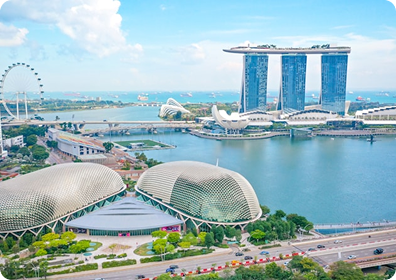
Singapore
Discover how the Singapore healthcare system works
Singapore has an excellent healthcare system: the quality of care and facilities is very good and people even come from all over Asia to be treated there. The Singapore system, based essentially on individual responsibility, is very efficient and represents a true global benchmark.
It is built around 4 programs:
– Medifund: basic health insurance for the least affluent.
– Medisave: mandatory coverage that works through the deduction of a portion of the citizen’s salary that is then deposited in a bank account to allow them to self-finance their medical expenses.
– Medishield: non-mandatory health insurance that tops up the Medisave scheme to finance medical expenses incurred in the treatment of very serious diseases.
– Medishield Plus: an insurance scheme that partially reimburses medical expenses in the private system.
It is very difficult to become a permanent resident but, if you are, you can enroll in these programs by contacting the Central Provident Fund Board (C.P.F). However, if you are an expatriate, it is highly recommended that you take out private international health insurance.
Healthcare formalities for expatriates
Healthcare formalities for expatriates
In Singapore, visa policies are fairly flexible and allow many expatriates, especially EU citizens, to enter and stay for up to three months without a visa. For expatriates from countries requiring a visa, they can obtain an entry or business visa from the embassy of their country of residence. However, it’s important to note that all visitors must have a return airline ticket and proof of sufficient funds for the duration of the stay.
If an expatriate wishes to live and work in Singapore for a long period, they will need to apply for a renewable long-term residence permit (the Long-Term Visit Pass or LTVP). There are different types of permits and passes depending on the level of qualification and remuneration.
Generally speaking, it is highly recommended that you take out international health insurance before moving to Singapore to avoid high medical expenses and have access to healthcare providers who speak your language and understand your specific needs as an expatriate.
Visiting a doctor
It is possible to see a doctor without an appointment in the many medical centers in Singapore.
The price of a consultation with a general practitioner is around 40 to 100 SGD (25 to 62 euros) and for a specialist around 180 SGD (125 euros). All medical staff speak English.
Being admitted to hospital
It should be noted that some public hospitals have special facilities for foreign nationals. The price of care is quite reasonable in the public sector but it is much higher in the private sector.
You will often be asked to pay your hospital fees in cash so you should opt for hospitals belonging to the medical network operated by your international health insurer and where you can benefit from direct billing.
Buying medication
In Singapore, it is possible to get medicines directly from the doctor, right after the consultation. Pharmacies that dispense non-prescription medicines are often located in supermarkets and there are also duty pharmacies in every hospital. Prescriptions from foreign doctors cannot be used in Singapore and pharmacies require a prescription from a doctor with a local license. Patients should bring foreign prescriptions (preferably translated into English) when visiting a local doctor to obtain the required prescription.
Vaccinations to be carried out
There are no mandatory vaccinations for travel to Singapore but it is recommended that you are up to date with the following:
- Vaccination against yellow fever is required for travelers coming from countries where this disease is endemic.
- Vaccination against hepatitis A is recommended for all travelers.
- Vaccination against hepatitis B is recommended for travelers who may be exposed to bodily fluids, such as healthcare professionals or people who have unprotected sex.
- Vaccination against diphtheria and tetanus is recommended for all travelers.
It is advisable to consult a doctor or healthcare professional before traveling abroad for specific health recommendations for your destination and personal situation.
Health risks
Overall, Singapore is a relatively safe country in terms of health, with high medical standards and a well-developed healthcare system. However, as in any country, there are some health risks that visitors and residents should be aware of:
- Dengue: a viral disease transmitted by mosquitoes. Visitors should take steps to avoid mosquito bites, including wearing long clothes and using insect repellent.
- Water-borne diseases: Singapore has high-quality tap water, but it’s advisable to take extra precautions when drinking water outside of hotels and restaurants.
- Respiratory infections: Singapore can experience spikes in air pollution, especially during the forest fire season in the region. People with respiratory diseases may be more sensitive to these periods of pollution.
- Food infections: care should be taken when eating raw or undercooked food as this can lead to food infections. On the other hand, the water is safe to drink more or less everywhere.
In general, travelers to Singapore can take simple steps to minimize health risks, including by following basic health and hygiene guidelines.
Good to know
Emergency services and useful numbers:
- Police: 999
- Fire and ambulance: 995
- Medical emergencies: 995